Effective October 31, 2017 Employers in New York City Can No Longer Ask About an Applicant’s Salary History

dollar_steel.jpg

Effective October 31, 2017 employers in New York City are prohibited from asking applicants in an interview or on an application to provide their current or past salaries, benefits, or other compensation.

This new law applies to all employers of any size that are hiring job applicants in New York City.

Benefits and other compensation include items, including without limitation: car allowance, retirement plans, bonuses.

Employers are also prohibited from doing any investigation into the applicant’s salary history by speaking with third parties, the applicant’s current or former employer or searching public records. If an employer come by this information, the employer cannot use the information in making a decision as to hiring the applicant.

Employers cannot ask applicants about the amount of commissions earned, but can ask objective indicators of performance, like volume, value or frequency of sales.

Employers may ask about deferred compensation and/or equity the applicant may have to forego to take the position, as well as the value and structure of the deferred compensation and/or equity and may request documentation to verify the applicant’s representation and consider this information when making an offer to the applicant.

Employers can ask applicants about their compensation expectations or about other offers the applicant may currently have pending including the value of these offers

The law does not apply to applicants applying for internal transfer or promotion within their current employer.

The law does not apply to those in public sector jobs in which salary is governed by a collective bargaining agreement.

Employers are free to ask about a person’s salary history after the person has already been hired. The law only governs the hiring process and does not speak to inquiries made after a person has been hired and is working for the employer.

Employers found to be in violation of the new law may be required to pay damages and/or fines and/or may be subjected to mandatory trainings.

For more information visit the New York City Salary History Frequently Asked Questions by using the following link: www1.nyc.gov/site/cchr/media/salary-history-frequently-asked-questions.page  

The goal of the new law is to eliminate pay disparity and discrimination for women and minorities who may have been receiving lower salaries, benefits and other compensation. The new law affords an opportunity to break the cycle of inequity in the workplace by focusing on the applicant’s qualifications for the position.


Why Should I Have My Severance Package Reviewed Before Signing It?

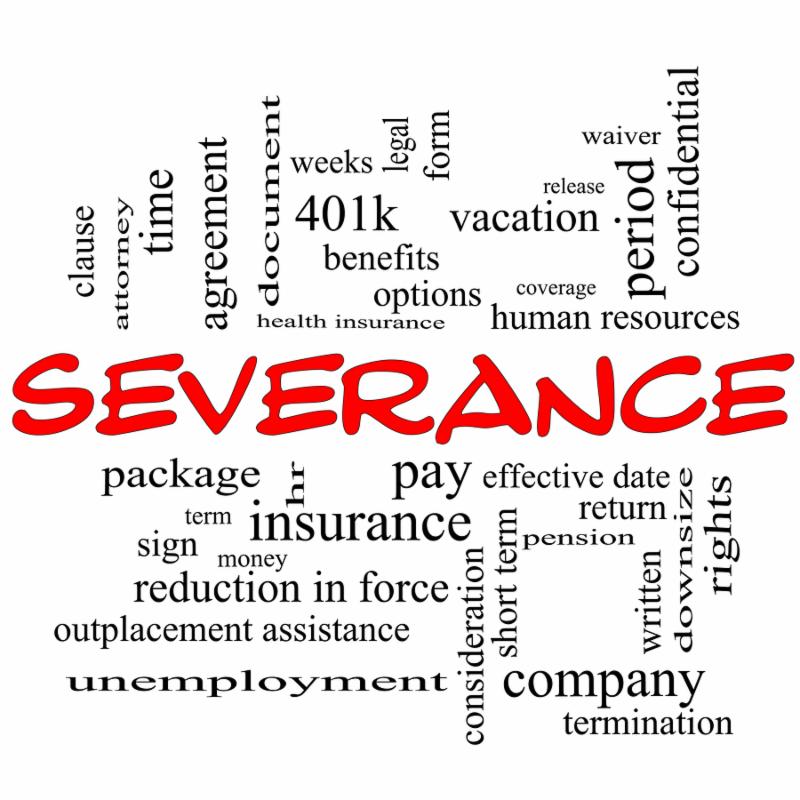
Severance Word Cloud Concept in red caps with great terms such as pay package hr benefits and more.

Severance packages are legal documents that must be understood prior to signing and returning them to your employer even if they appear simply written. They have been carefully written by your employer to provide you with certain benefits in exchange for you giving up certain rights.

In reviewing a severance agreement, there are many items to consider. A few examples are:

(1) How long do you have to sign the agreement? This time period may be dependent upon your age and also if the separation is considered a one-off (meaning just you) or a mass layoff (multiple employees).

(2) Will the payments be made to you in lump sum or over time?

(3) Are the payments mitigated by your receipt of unemployment benefits or new employment?

(4) How long will your health benefits continue? Will the company pay for this?

(5) Will you receive your bonus or a pro-rated bonus?

(6) If you were relocated, will you be returned to your original location?

(7) Does the severance package include provisions such as a non-compete, non-solicitation, non-disclosure, confidentiality? If so, what do these mean for your future employability?

(8) Is their a mutual release of claims?

(9) Are you or have you received your 401K matching contribution from the company?

(10) Will you receive outplacement?

(11) Are you going to be paid for your accrued vacation days?

(12) Are you entitled to pay for unused sick days?

Besides the above, if you have been selected for termination and are offered a severance package, there is a key question to consider – Why was I personally selected to be fired?

Even if the company is undergoing a mass layoff, this question is still pertinent, as there may be a reason that you were selected for termination over another employee. Why? Did you report discrimination? Did you refuse to engage in impropriety? Was your selection based on an impermissible/illegal rationale?

A severance package should be reviewed even if you think you are comfortable with the offer. It is important that you understand the obligations that are required of you in exchange for the pay you are going to receive.

If you are interested in having your severance package reviewed to understand your rights and the document(s) itself, please contact our office. We understand that you must respond to a severance document in a timely fashion and are able to promptly review and respond to your concerns.

The Firm is also available to assist you in requesting and/or negotiating different terms and/or language in the severance agreement. The goal of severance is that the parties are able to part ways. The employee receives some benefits (money, benefits, etc.) while the employer receives a release of claims and possibly a non-compete and confidentiality.

Remember, signing a severance agreement may have an impact on your future and your ability to obtain future employment. It should not be taken lightly, but should be reviewed by a legal professional familiar with these documents. We have much experience in reviewing and negotiating these documents and are available to help you so that you do not have to try and maneuver this process alone.